Day One: Barberani, Civita di Bagnoregio
I drove out of Rome on a cloudy March day, managing to get my tiny Peugeot onto the autostrada without any major incident (albeit not without some self-inflicted detours). My destination for the weekend was Umbria with its ancient hilltop towns and, more importantly, its distinct native grape varieties, Grechetto and Sagrantino, which I was curious to try.
By the time I got to my first producer, Barberani, the unpromising weather got worse and I found myself standing in front of a locked winery door, getting soaked in the rain. Thankfully, Niccolò Barberani, one of the two brothers/owners, swiftly appeared and let me in for a private tasting. Founded in 1961, the estate has built a reputation for producing exceptional examples of the Orvieto Classico Secco and a dry late harvest Orvieto Superiore. According to the Wine Atlas (Hugh Johnson & Jancis Robinson) these were “some of the best white wines in the whole of Italy.” Intrigued? So was I.
Orvieto DOC wines are white blends, made predominantly from Trebbiano, Grechetto, plus other local grapes. Having lost their way in the 60s and 70s due to a mass market preference for basic dry whites, these wines are now experiencing a renaissance.
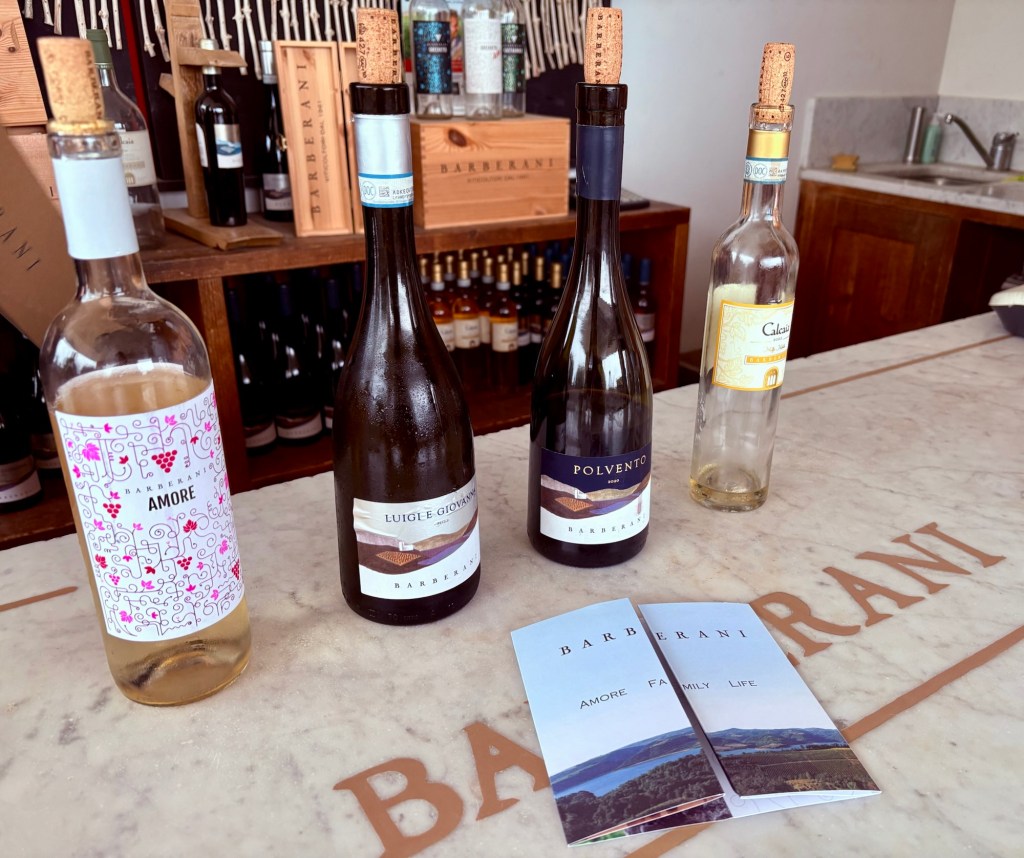
Barberani’s flagship Luigi e Giovanna (2016) is a shining example of the complexity and depth that can be achieved in this style. Part of the grapes used in the production of this wine has been affected by noble rot, which gives it a richer, almost tropical flavour (ripe peach, mango) that is complemented by a honeyed herbaceous note coming from the Grechetto. Full-bodied and elegant, this wine clearly has ageing potential. (4.2/5)
The sweet Calcaia Orvieto Classico Superiore Dolce (2022) is “the jewel” of Barberani’s line-up. On the lighter spectrum of dessert wines, it is bright, nutty, and floral (rather than southern Italy’s traditional ripe stone fruit). Niccolò’s tasting note was “caramelised oranges”, which fits perfectly. (4.1/5)
But it’s not all about whites in Barberani. The Polvento (2020) is a youthful 100% Sangiovese, fruitier and lighter than Tuscan expressions due to the winery’s unique hilltop+lake microclimate. Cherries, tree bark, pine needles, and an earthy balsamic note give this wine tons of character. Sangiovese tannins always get me, so I would have loved to try an older vintage of this to see how its character develops with some bottle age. (4/5)
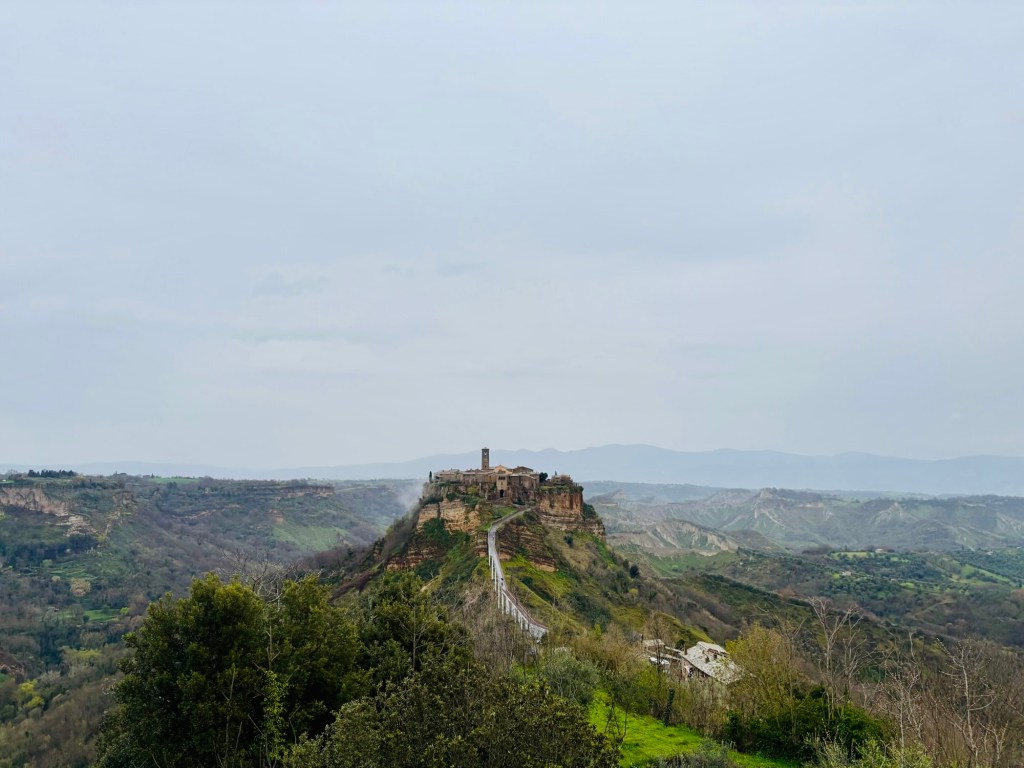
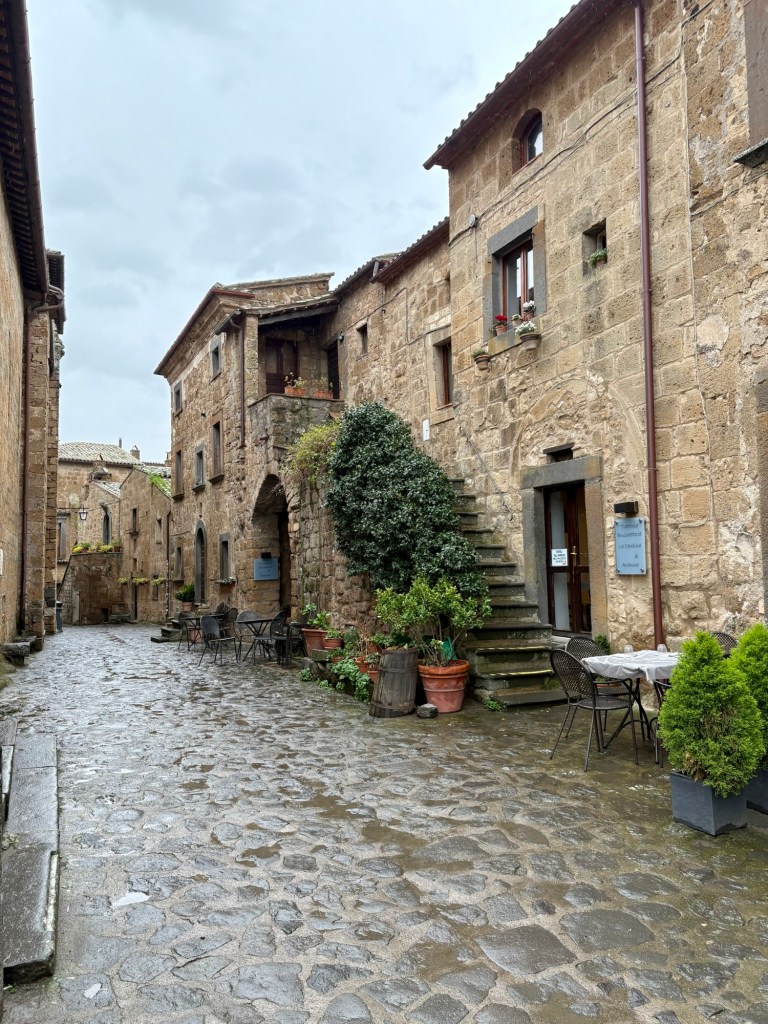
Leaving Niccolò’s friendly company and with two bottles of Orvieto for my cellar, I braved the rain and continued on my discovery journey, dipping from Umbria back into Lazio to visit Civita di Bagnoregio, a little culture to pair with all the wine. An old hilltop village only accessible by a long pedestrian bridge, this now seems to be purely a touristic attraction, particularly empty and melancholy on this grey spring day. The best way to enjoy Civita is to look at it from a distance, wondering about the effort, ingenuity, and dedication it took to build a village on top of a rock.
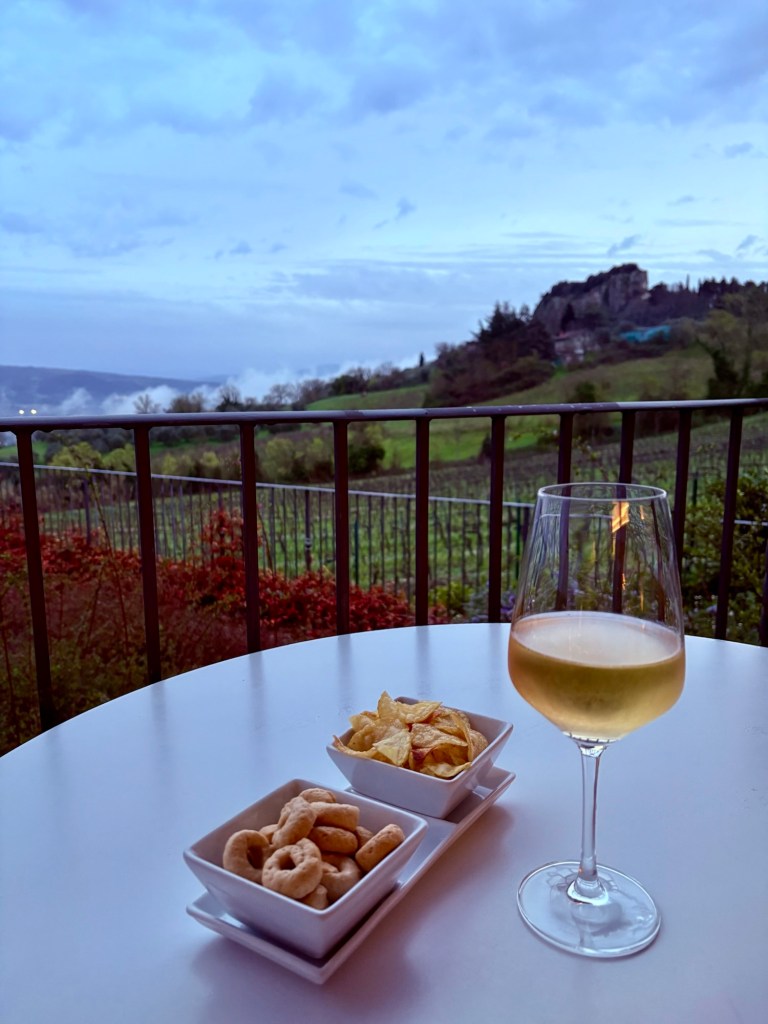
I continued my journey to Alta Rocca hotel and winery, where I would spend the night. Coincidentally Alta Rocca was also located on top of a rock, albeit not as dramatic as Civita. Sipping the distinctly average Alta Rocca Orvieto Classico Superiore on the hotel terrace, I gazed over the vineyards and the valley below, which shimmered with the lights of houses and cars. Italy definitely knew how to do hills and how to do them well.
Day Two: Orvieto, Torgiano, Lungarotti
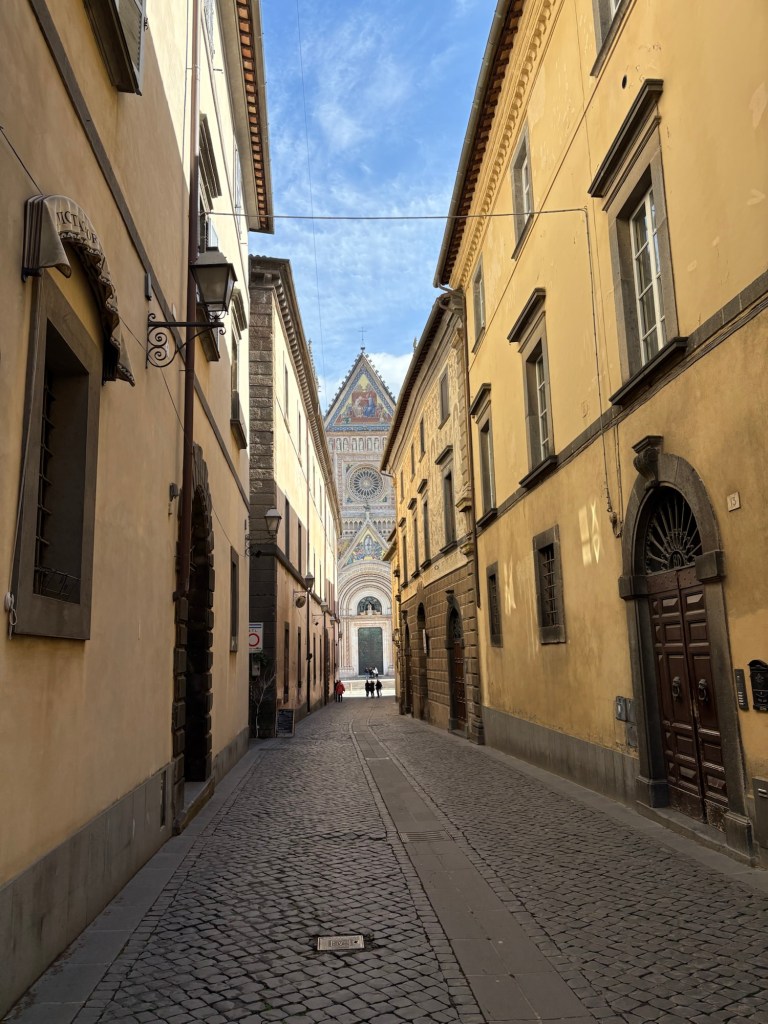
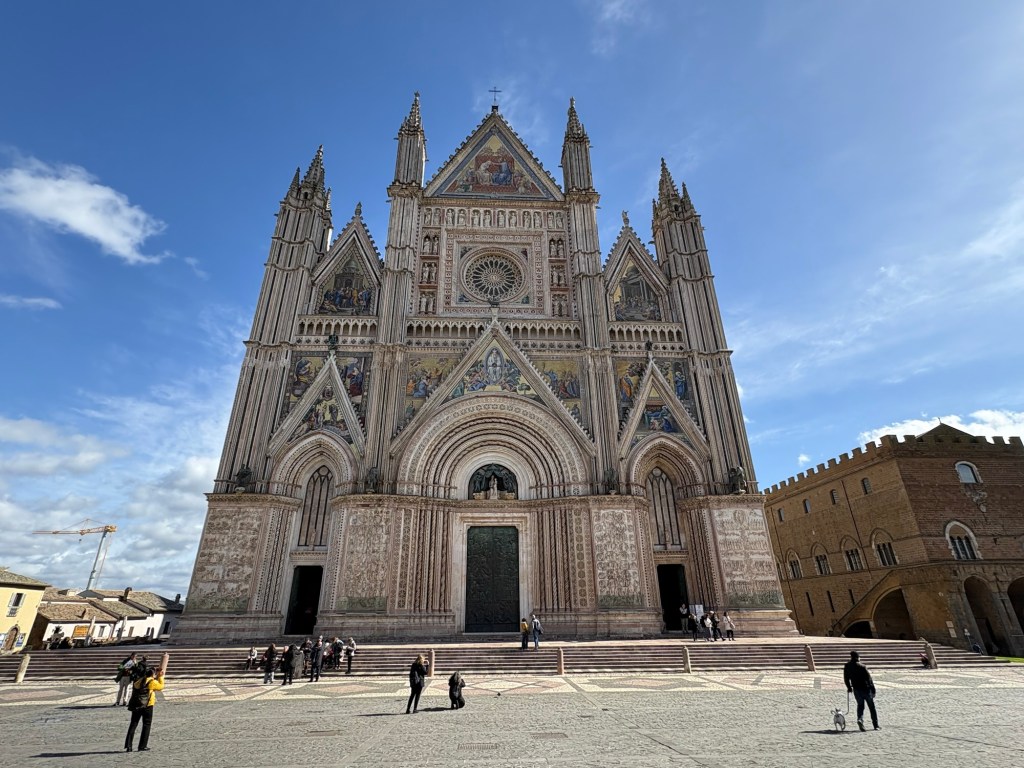
The next morning started with a lovely breakfast on the terrace surrounded by smoking Italians leisurely sipping their espressos. A short drive to Orvieto followed with a few hours spent exploring the town. If there is one thing you must see, it’s the Duomo – a shining pearl glistening in the March sunlight, white with colourful mosaics and intricate details. Both outside and in, it mesmerizes and stops you in your tracks. The nearby Emilio Greco museum dedicated to the prolific Italian sculptor features many of his drawings which can’t help but lead you to conclude that the man was obsessed with women’s bottoms. Look it up.
After a sturdy boar tagliatelle at Trattoria dell’Orso, I was on my way to my second tasting of the trip at Lungarotti. True to form, I decided to avoid the highway in favour of a small winding road that beckoned with the promise of sweeping views, adventure vibes, and a potential flat tire. Driving through the Umbrian forests and hills, I reflected on the incredible diversity and richness of Italian culture, cuisine, and wine. Having been to Italy a dozen times, I find each trip to be a discovery that offers up surprising new experiences – be it a grape variety I’ve never heard of, a pasta shape I’ve never seen, or a small town that feels like it’s the most charming place I’ve ever been to.
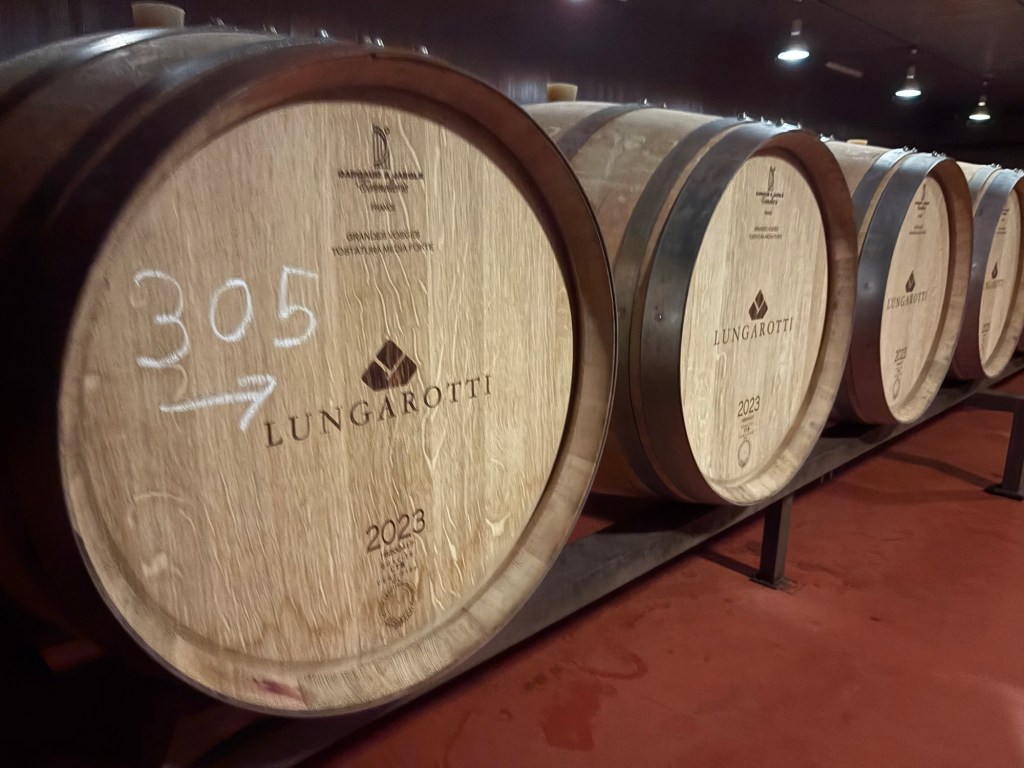
Arriving at Lungarotti early, I parked the car and went off to explore the small town of Torgiano, where the Lungarotti family is from. Nearly empty, neat and quiet (especially in comparison with the bustling Orvieto), it made an eerie impression. Returning to the winery, I was met by Giulia, a young woman who spent the next three hours giving me one of the best wine tours I’ve ever been on (and did I mention it was private?).
We walked around the whole production facility and talked about the mighty machinery that helps transform tons of grapes into thousands of bottles of red, white, and sparkling wine. Truly a family affair, Lungarotti was founded in the 1950s by Giorgio Lungarotti, who dreamed of producing exceptional wines in his hometown. Today, his wife, Maria Grazia, still manages the Lungarotti Foundation and his daughters, Chiara and Teresa, are continuing his wine-making success. The Lungarotti cellar is home to some real treasures, like bottles from its original 1967 vintage. Drinkable? Probably not. Priceless? Definitely.
Most famous for their Torgiano reds, Lungarotti also produces beautiful whites and even sparkling (in this climate!). The sparkling production is small but is done in the traditional method without the use of giropalates, which means that employees manually riddle (twist the bottles a small amount in the special racks to allow dead yeast to be gradually shifted to the gorge of the bottle). I’ve been assured that this isn’t an intern’s job. My favourite detail from the tour was when Giulia pointed out the original overhead conveyor that carried in bottles for bottling decades ago, kept in place as a reminder of tradition and still working (albeit adjusted for the new bottle sizes).


After the tour Giulia poured me the most iconic Lungarotti wines. We started with the whites: the Torre di Giano Vigna Il Pino Torgiano Bianco (2020) is a blend of Vermentino (primarily) with Grechetto and Trebbiano. The end product is a silky wine that leads with lemon, apricot, floral honey, and an edge of minerality. It’s like being on a Vespa in Rome and being a little bit in love. (4.1/5)
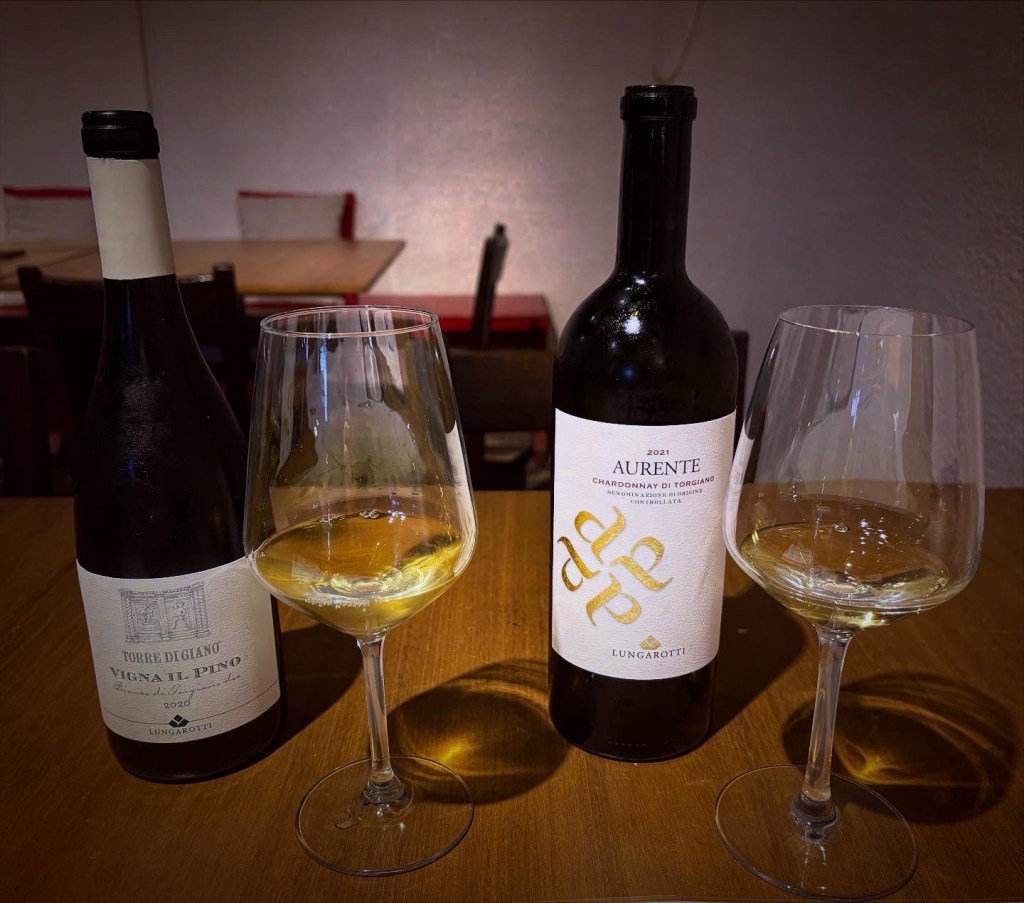
The Aurente Chardonnay (2021) followed and tasted exactly as you’d expect from a warmer climate Chard – slightly tropical (mango, pineapple), with notes of butter and vanilla. There is a good level of acidity here, so it would be interesting to revisit this wine in a few years to see how it develops. (4/5)
On to the star of the show: Rubesco Vigna Monticchio Torgiano Rosso Riserva (2019). The best example of Torgiano Rosso, this is a 100% Sangiovese with 4 years of bottle-ageing under its belt. Despite the age, the tannins in this wine are still raging; this needs years. The nose and palate are kirsch, dried cranberry, violet, clove, and cardamom. Isabella Rossellini in a bottle. (4.1/5)

Continuing with the reds, the San Giorgio Umbria Rosso (2019) is a Super Umbrian (like Tuscany’s famous Super Tuscans, blends which feature international grape varieties), a blend of Sangiovese and Cabernet Sauvignon. On the nose it’s pure blackcurrant leaf and herbaceousness; you’re lulled into thinking you’re having a Cab and then BAM! Tannins, raspberry, sweet spice, anise, leather – the Sangiovese takes you on a journey. A cool wine for people who like wine. (4.1/5)
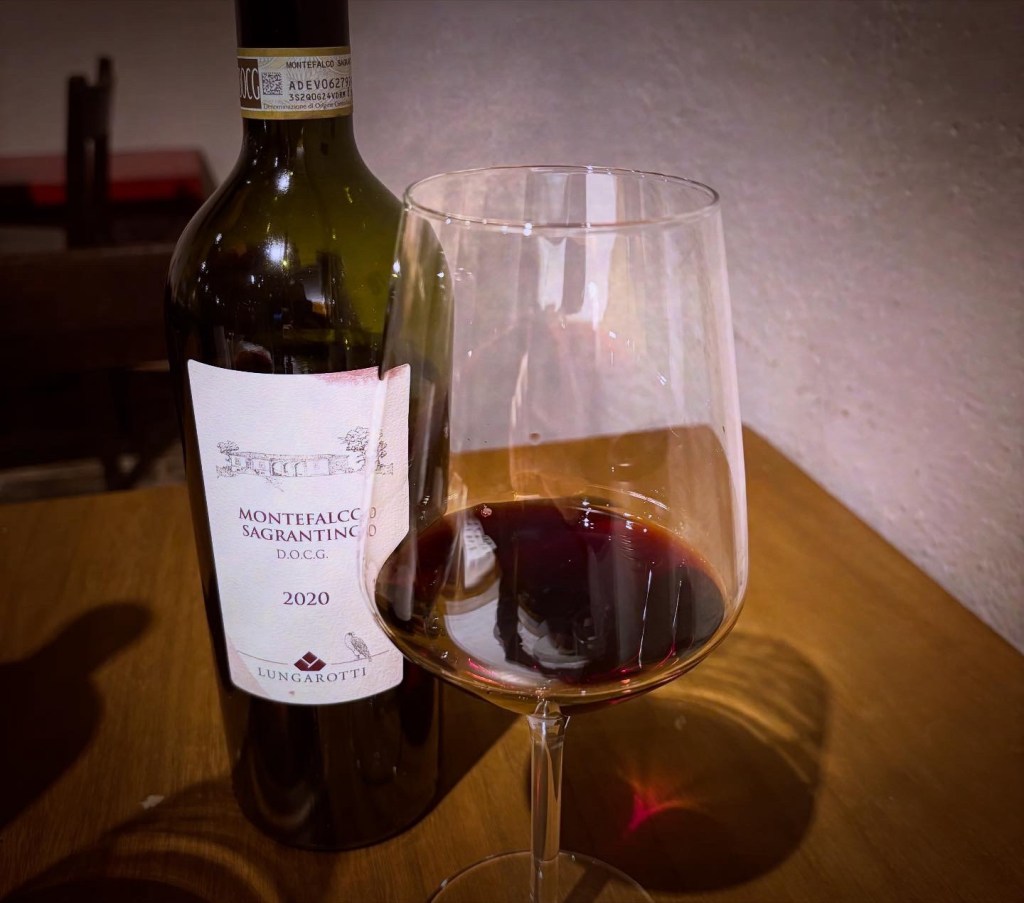
We finished with the Sagrantino di Montefalco, coming from Lungarotti’s most recent expansion, its Montefalco vineyard. Serious like a mafia boss, this wine is too dark and too tannic for my taste, but would appeal to lovers of big bold reds. Balsamic, soy, blackberry, black cherry, earth, and massive tannins that won’t be tamed. (4/5)
An exceptional tasting of a stellar line up. My only regret was having to spit out most of the wine in order to continue my drive to Assisi, the moody medieval hilltop town, full of churches, pilgrims, cats, and extremely narrow streets not built for modern cars. But that’s a whole other story.

 Wine.Musings
Leave a comment