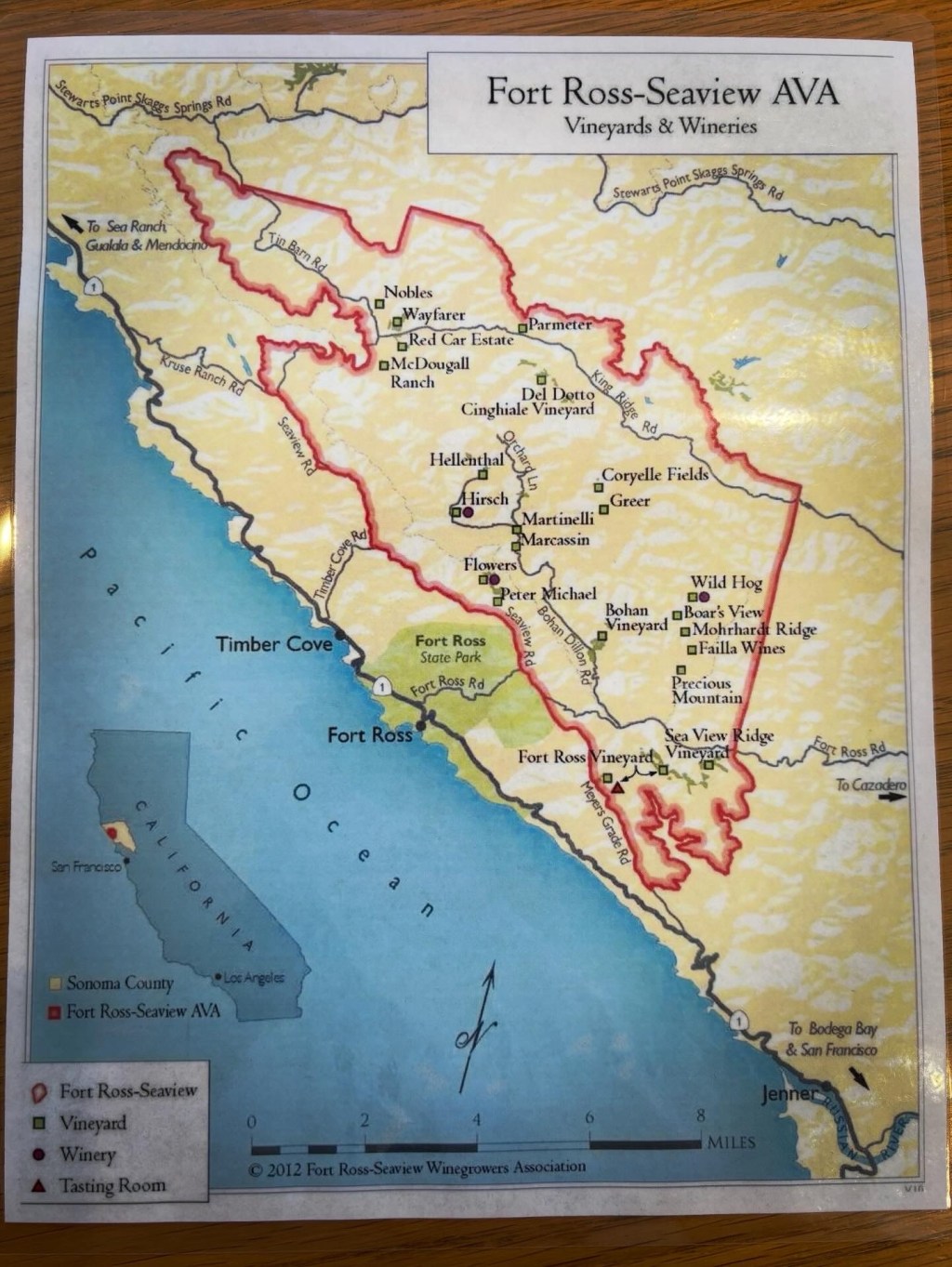
Driving out of Healdsburg towards the Pacific coast, I am filled with anticipation. Sonoma valley and its polished vineyards drop behind as we head into the wooded hills, towards lazily sprawling coastal clouds. I’ve dreamed about seeing this corner of the world ever since trying West Sonoma Coast’s ethereal Pinot Noirs and restrained Syrahs as part of my certification program in Californian wine.
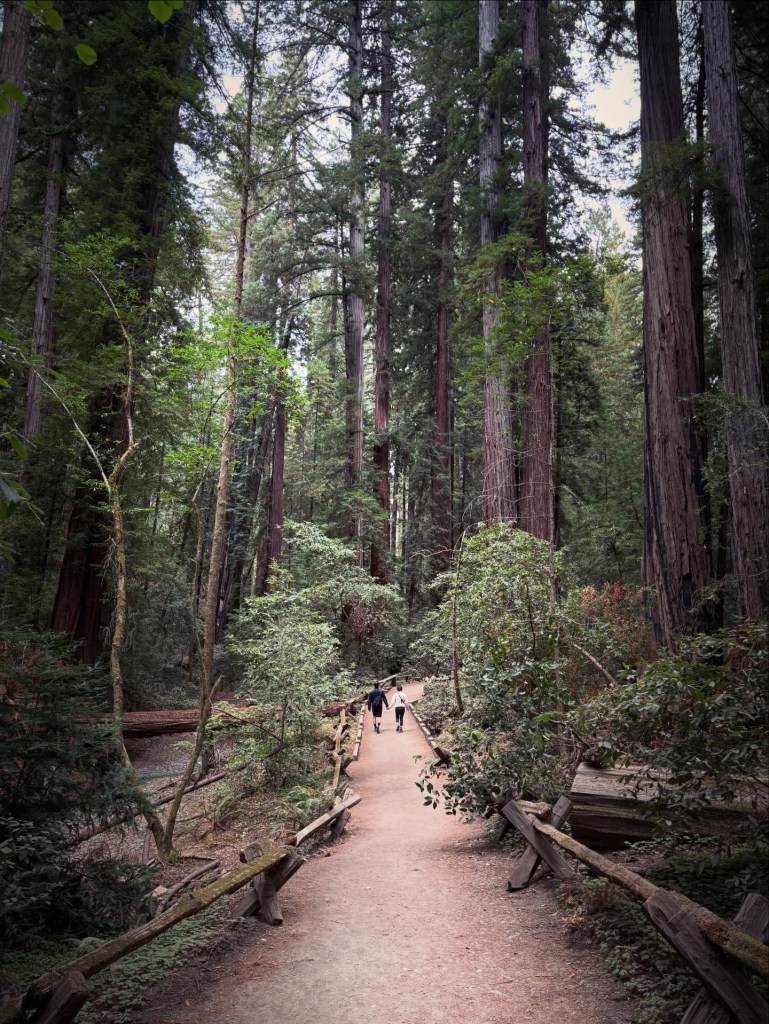
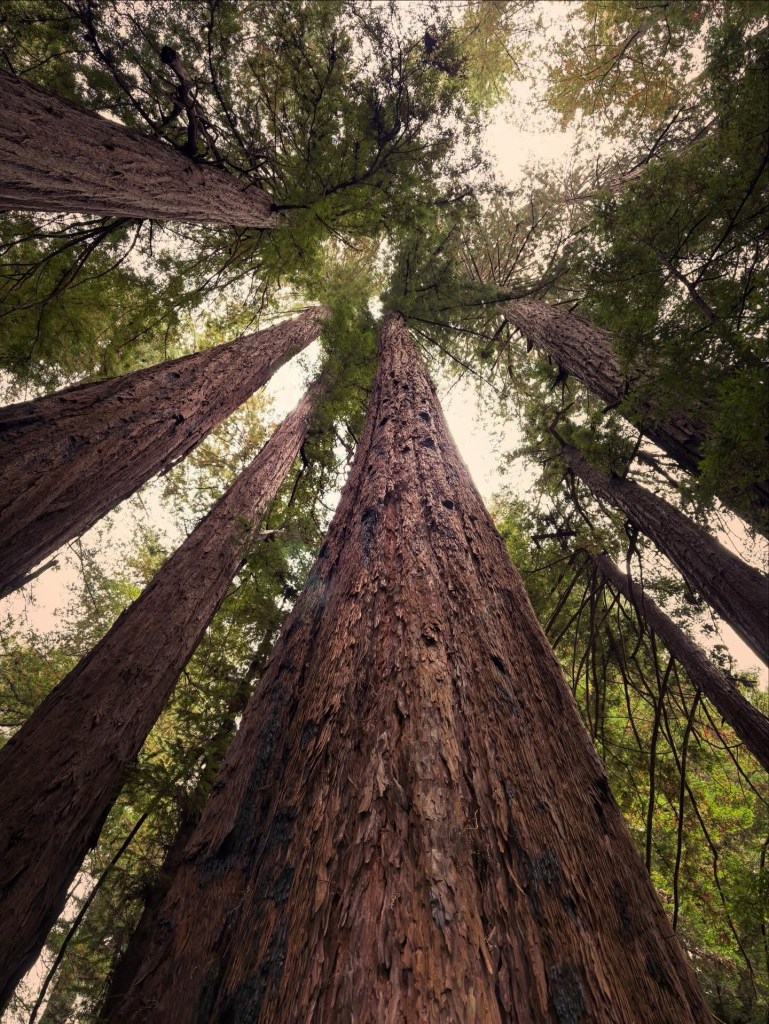
To truly understand the soul of West Sonoma, we stop at the Armstrong Redwoods State Natural Reserve to admire the majestic coastal redwoods. Walking among these ancient giants, you cannot help but feel awestruck, transported to the primordial forests that existed long before humans ever did. While their counts were drastically reduced due to logging, today redwoods still grow across the coast, defining its landscape and terroir. Would I taste them in the wines? Only one way to find out.
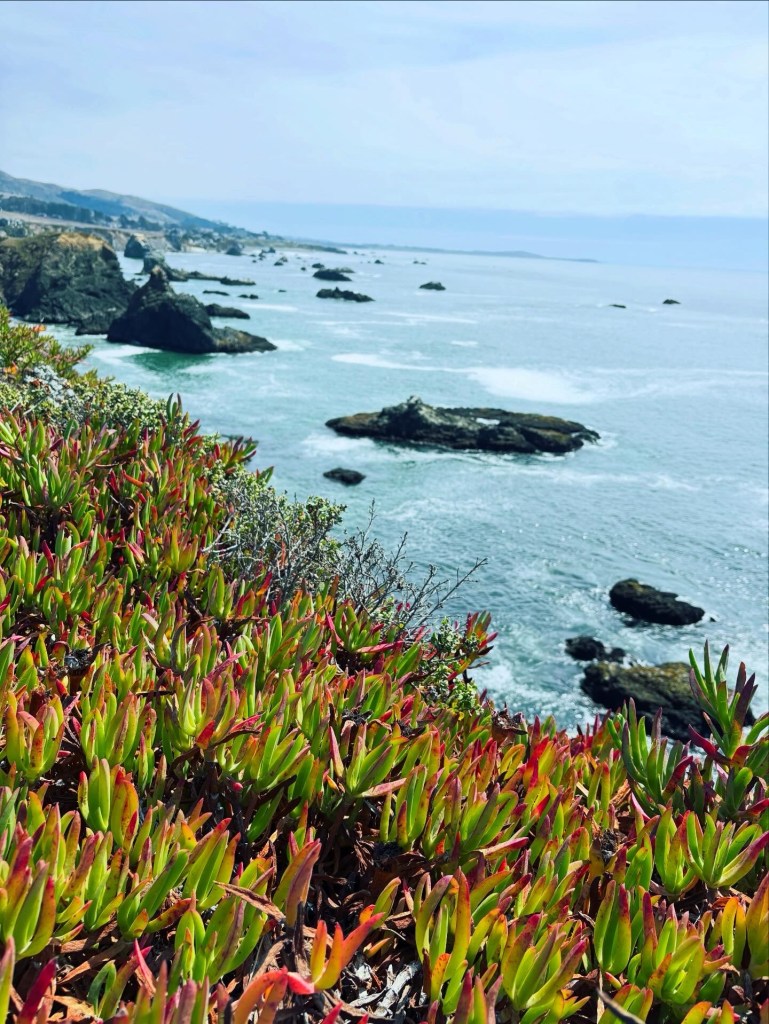
We drive on and the hills and forests open up to show us the moody Pacific ocean. To the north – Fort Ross, the historic Russian settlement established in 1812. Around it, the Fort Ross-Seaview AVA is the heart of West Sonoma wine country, renowned for its Pinot Noir and Chardonnay. I desperately want to go there, but it’s proven to be next to impossible to arrange tastings directly at the vineyards. Remoteness and lack of steady tourism traffic push winemakers to host tasting closer to civilization. Reluctantly, we turn back.
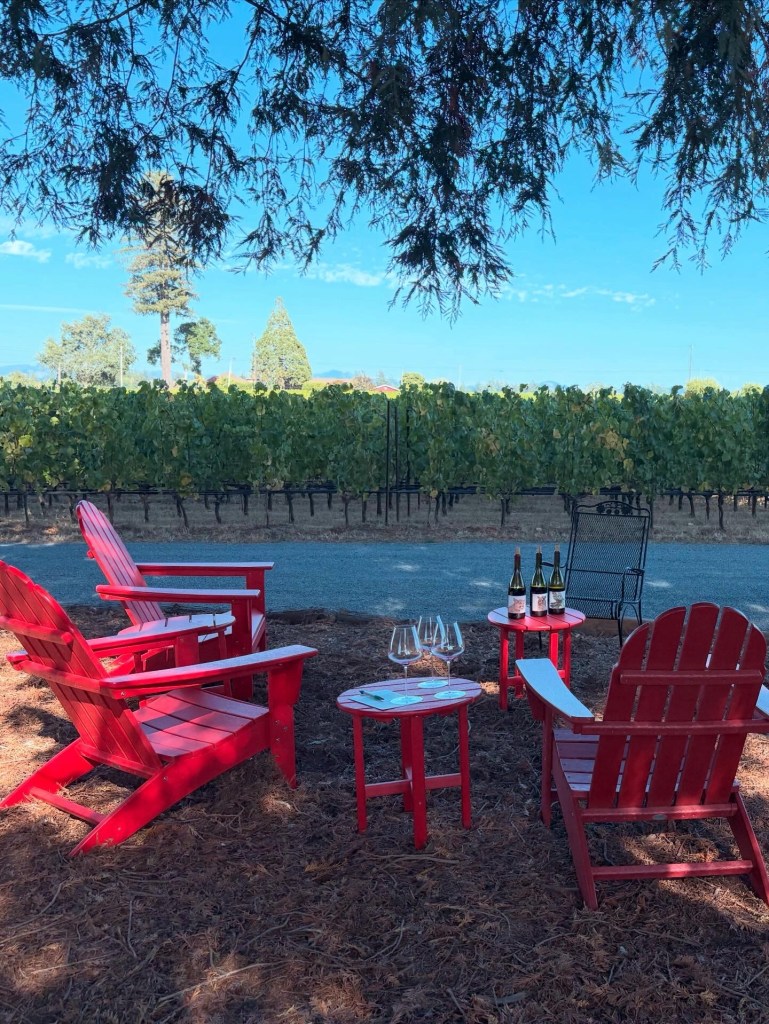
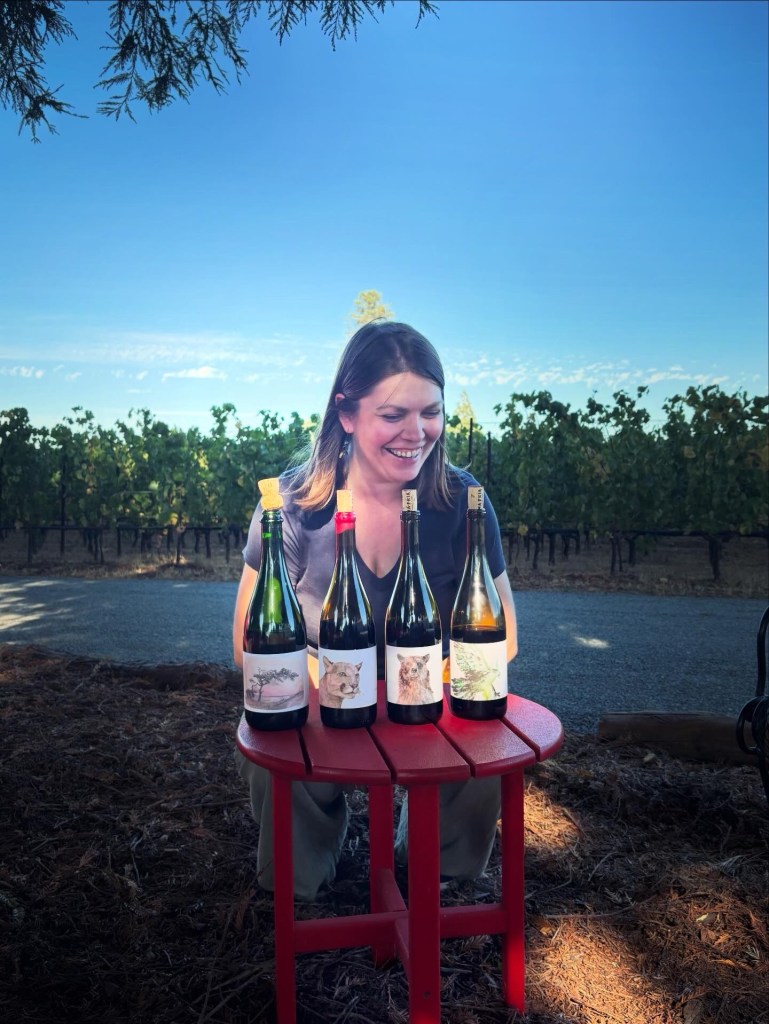
Our first wine tasting stop is Alma Fria. We are sitting in red Adirondack garden chairs under a redwood grove, overlooking rows of grapevines. Carroll, the man behind Alma Fria, pours us his wine selection as he shares his life story and decision to move his whole family to this wild coast in his pursuit of fresher, more graceful expressions of Pinot Noir. His wines prove that his gamble paid of:
The Plural (2023) is fruit-forward, full of gentle plum and wild raspberry. (4/5) The Holtermann Vineyard (2023) is warmer with plusher tannins. It feels more grounded and soulful, while retaining coastal elegance. (4.1/5)
Top of the line is the Doña Margarita Vineyard (2023), a wine that speaks so eloquently of its origin that if you close your eyes it will transport you there. It may be psychosomatic, but I swear that I can taste wood and pine, menthol and cherry, and smoky earth. (4.2/5)
These Pinots are light, crisp, and masterfully put together.The surprise of the tasting is Stolo (2023), Carroll’s larger-than-life Syrah. A ridiculous, almost overwhelming amount of peppery character leaps out of the glass. (4.1/5) I buy a bottle just to have the chance to try this wine with a gamey peppery salami when I return home.
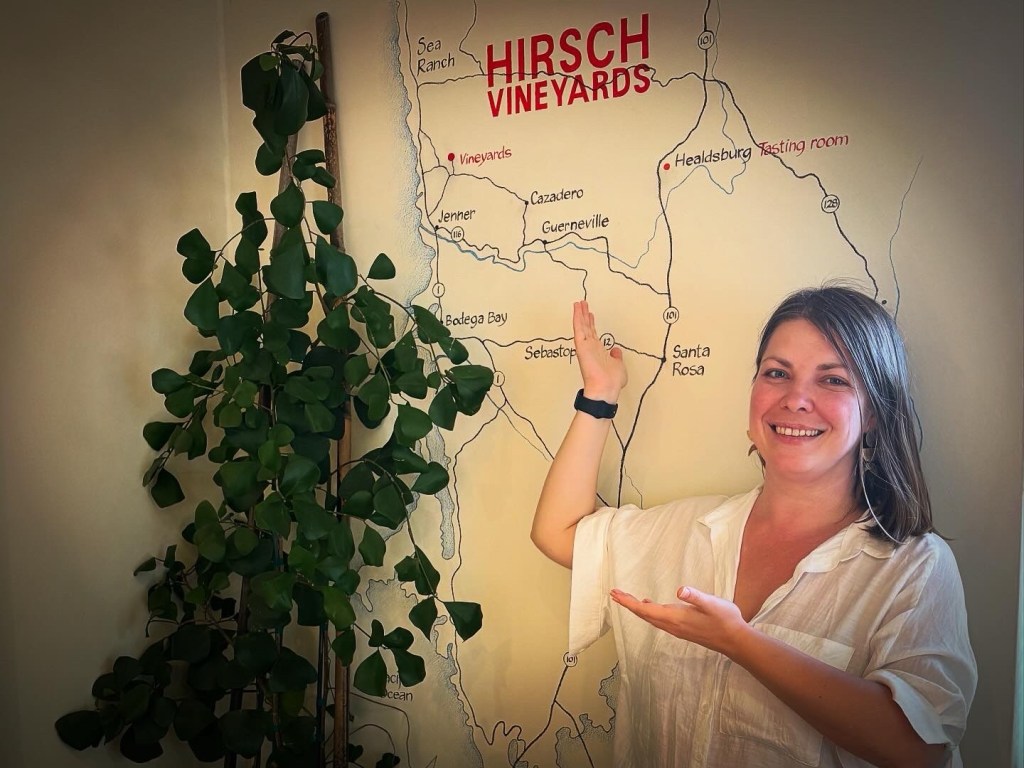
Continuing our West Sonoma tasting, we drive over to the tiny Hirsch tasting room, where we are greeted by Rob, Hirsch’s friendly and knowledgeable hospitality manager. One of the most premium wineries in the AVA, Hirsch is best known for its Pinots, but its whites are no less interesting. The Coastal Chardonnay (2023) is structured, clean, vibrant, full of nectarine, quince, and honey. (4.2/5)
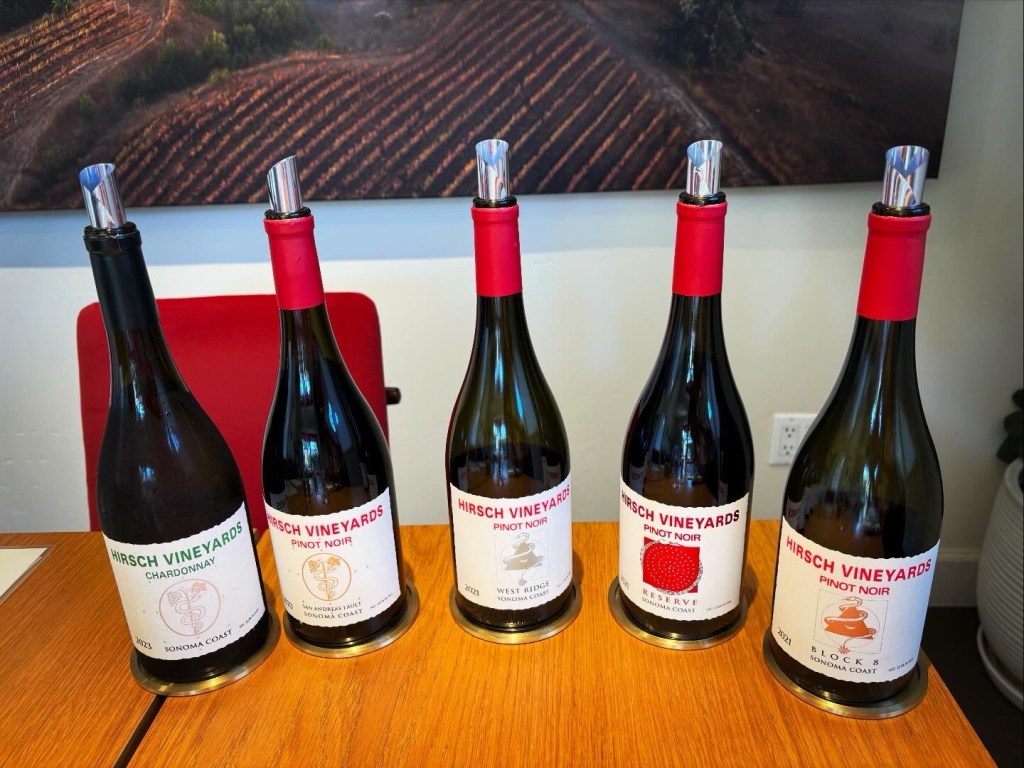
The Pinot line up is sensational. San Andreas Fault Pinot Noir (2021) is slightly reductive, with notes of spicy raspberry and a bit of tobacco and vanilla from German-Austrian oak. (4/5)
We continue with the slightly heavier and wilder West Ridge Pinot Noir (2021) – a little stalky, with hints of blackcurrant leaf, black cherry, and again, psychosomatic redwood. (4/5)
My favourite of the Hirsch Pinots is the Reserve Pinot Noir (2021), a blind selection of Hirsch’s best barrels. Darker, more leathery, and with smoother tannins than the San Andreas, this has to be some of the best Pinot Noir I’ve ever tasted. Classical coastal Pinot flavours are nuanced with layers of gentle spice, smoke, and wet earth. (4.3/5)
We finish with the Block 8 Pinot Noir (2021) aka Hirsch’s “Grand Cru”, originating from a single hilltop vineyard. Raspberry, tobacco, eucalyptus, and chocolate marry up in a complex mix of flavours, framed by fine, yet structured tannins. A precise wine with a clear point of view. (4.3/5)
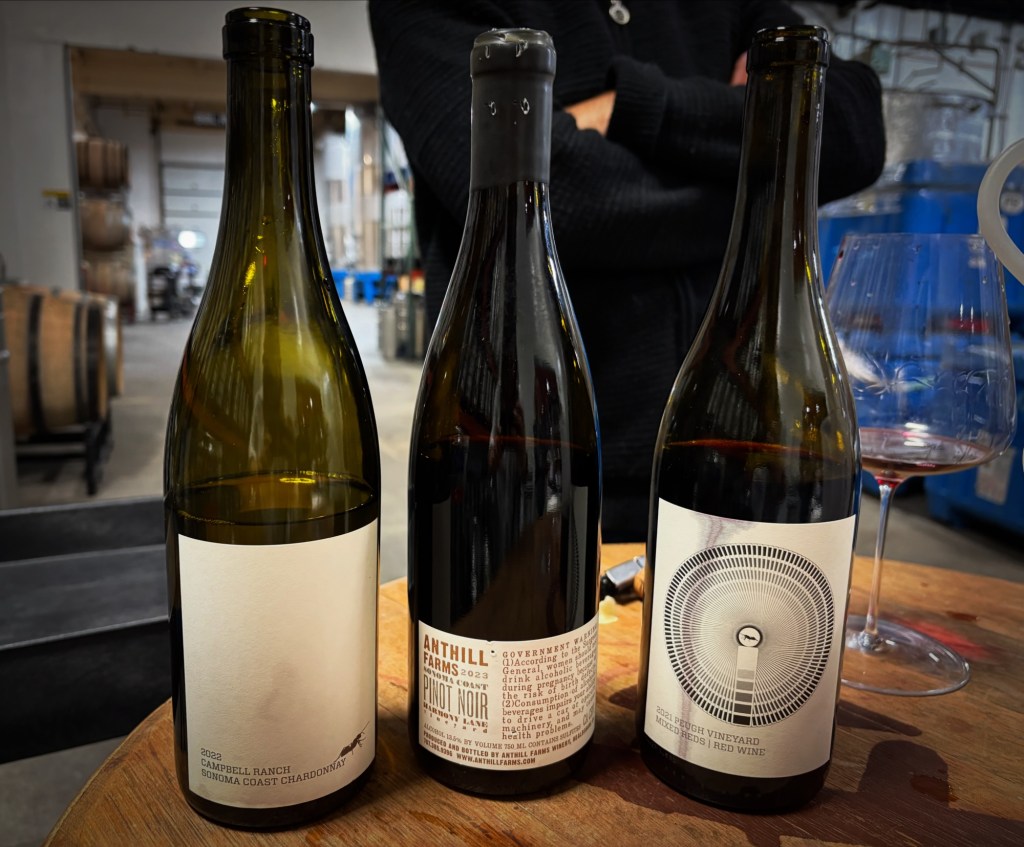
The next day we move further from the coast and focus on more classic Sonoma expressions. We spend our morning at Anthill Farms. The winemaker, Anthony, meets us at the shared crush facility, where he’s been making wine for the past few years. Walking through the industrial space, we taste wine straight from the barrel: from grapes just crushed yesterday (bright fuchsia and sweeter than you’d imagine), to a Chardonnay that has yet to be fined (read: cloudy in a way that would feel appropriate at a natural wine bar), to a Syrah almost ready for bottling.
Anthony’s passion for winemaking and experimentation is palpable and contagious. I seriously consider leaving everything behind and moving to coastal Sonoma to make wine.
We taste Anthill’s line-up. The Campbell Ranch Vineyard Chardonnay (2022) is cold, acidic, and bracing. A true coastal Chardonnay with a salty, reductive, and citrus-forward profile. (4.1/5) The Sonoma Coast Pinot Noir (2023) is noticeably richer and clove/tobacco-forward than anything we tried the previous day. (3.9/5)
My favourite wine of the tasting is Peugh Vineyard Mixed Blacks Red, a fruit-forward blend of Grenache, Mourvedre, Petit Syrah, Zinfandel, Alicante Bouschet. It’s big, bold, and jammy, but supported by a good level of acidity, it hits the spot. (4/5)
Our last stop of the trip is Joseph Swan Vineyards, started in 1968 by Joe Swan, an artist, a pilot, a maverick, and an embodiment of the American Dream. The quiet patio overlooking the rolling vineyard hills is a perfect setting to try these Californian wines made in the French way.
We wet our palates with the big ripe whites – the floral Viognier-like Saralee’s Vineyard Chardonnay (2023) and the exceedingly dry Grenache Blanc (2022) (both 3.9/5). The Valdigué (2022) follows, taking the first spot in the “Umm… what was that?” category. It’s a flirt of a wine that surprises you with its strawberry, watermelon, and bubblegum flavour. Served perfectly chilled. (4/5)
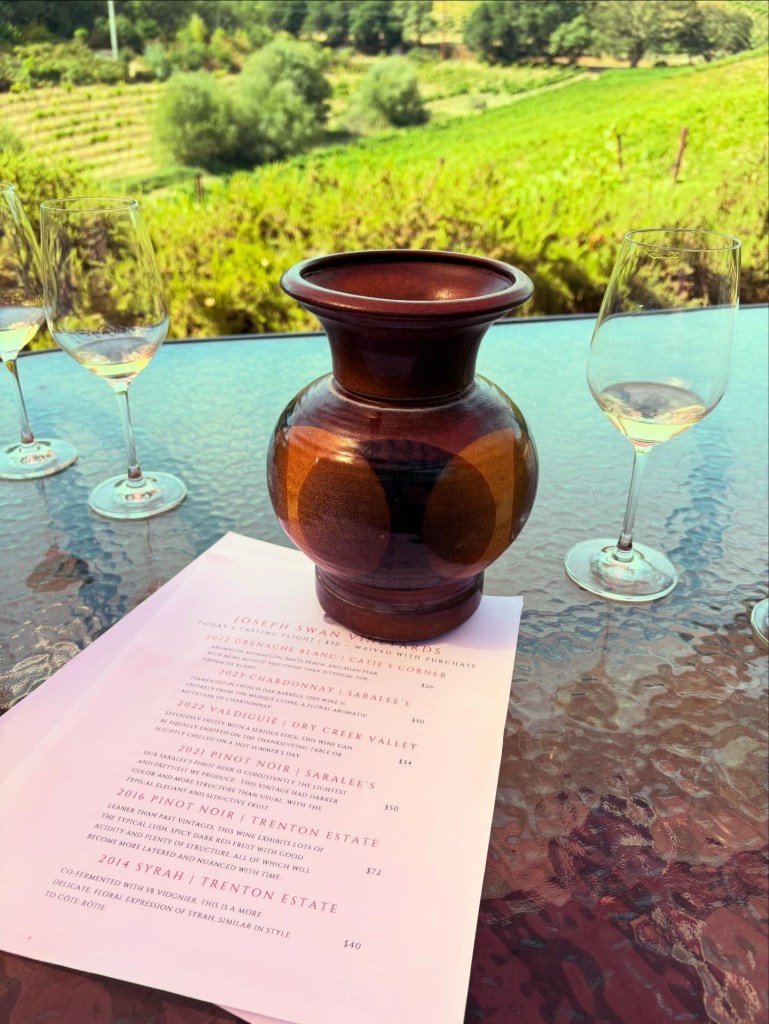
But it’s the reds where Joseph Swan shines. The Trenton Estate Vineyard Syrah (2014) immediately steals my heart with its bramble, mulberry, soft pepper, and spicy oak. Like the sounds of violin, drifting down from an open window, it feels elegant and timeless. (4.1/5)
The Saralee’s Vineyard Pinot Noir (2021) is bright and precise. Juicy red fruit leads into a smoky clove finish. It’s everything you’d want in a Sonoma Pinot, made in perfect balance. One step up, the Trenton Estate Pinot Noir (2016) holds its own next to the top cuvées from Alma Fria and Hirsch. Plusher and smoother than its coastal cousins, this is still classic cherry, psychosomatic redwoods, and earth. Already nearly a decade old, this wine still has significant ageing potential due to its brilliant acidity. (4.3/5)
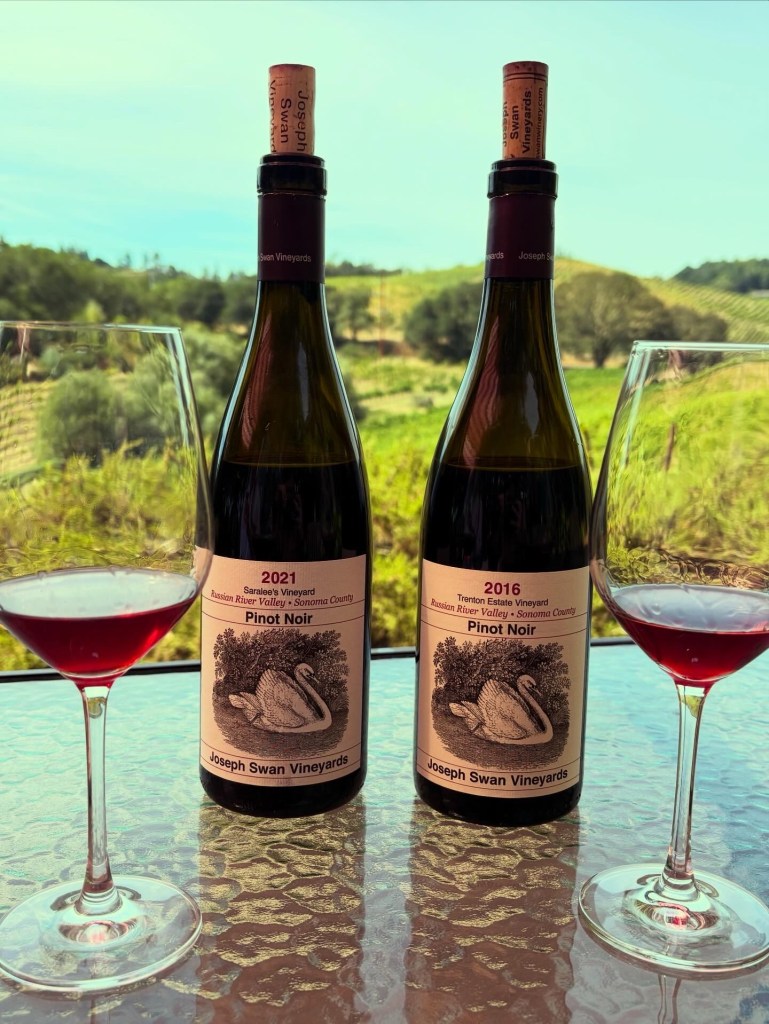
After the eye watering prices we’ve seen on our trip so far, Joseph Swan prices are a welcome respite. In fact, they may be some of the best value Sonoma bottles I’ve encountered so far. We take the opportunity to stock up.
As we finish our tasting, we are greeted by Rod Berglund, the current owner and winemaker. A character and a half, Rod regales us with stories from the field. Not for the first time on this trip, I recognize the irrepressible spirit of adventure and the quest for the perfectly expressed, perfectly balanced wine that Sonoma winemakers share.
We have to leave, but I realize that I cannot really leave Sonoma behind. I’m in love with its wines – yes, even at those eye-watering prices – and what they say about the land and the people that make them. I’m in love with the valley, the hills, the wilderness of the coast, and the redwoods… forever the redwoods.
 Wine.Musings
Leave a comment