There is a particular kind of humiliation reserved for people who consider themselves well-travelled. I am experiencing it now, at night, in the middle of a Chilean vineyard, with three dirt tracks leading nowhere and a hire car whose hill-climbing abilities fall considerably short of its ambitions. Admitting defeat, I WhatsApp my host for more directions than the original “go straight until you see the cabin”. After an additional 10 minutes of pushing my car to its limit, I finally arrive. I am in a cabin, in the middle of a vineyard, in Casablanca Valley, Chile.
As with all things that seem obvious once they’ve happened, Casablanca Valley looks like it’s always been destined for wine greatness. The cooling fog, the cold nights, and the coastal winds help grow some of the finest grapes in all of Chile. And yet, the first vines were only planted here in the 1980s through the sheer determination and self-belief of Casablanca’s wine pioneers. Today, the valley produces some of Chile’s most elegant whites and ephemeral reds.
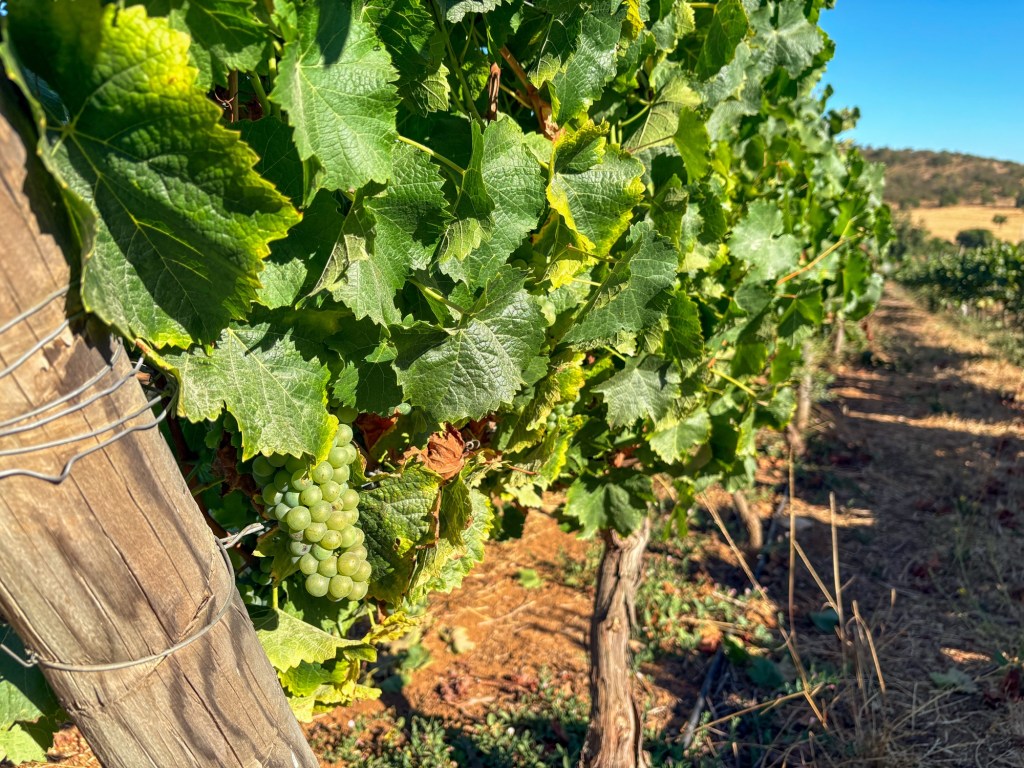
I wake up the next morning, ready to explore. The famous Casablanca fog is nowhere to be seen, so it seems I will just have to enjoy the sun. Oh well. My companion for the day is a Venezuelan taxi driver of considerable philosophical conviction. Chileans, he informs me, are the Germans of South America, they want everything to be orderly and quiet (even on the weekend!). He also wants to know if I am married.
Our first stop is Villard, and it is immediately apparent that everything else today will be measured against it. The winery was established in 1989, as the project of Thierry Villard, a Frenchman with an arguably eccentric idea of making premium Chardonnay and Pinot Noir in Chile, which was mostly known for its bold oaky reds. The gamble paid off. His son Jean-Charles now runs things alongside winemaker Anamaria Pacheco, walking the line between tradition and innovation.
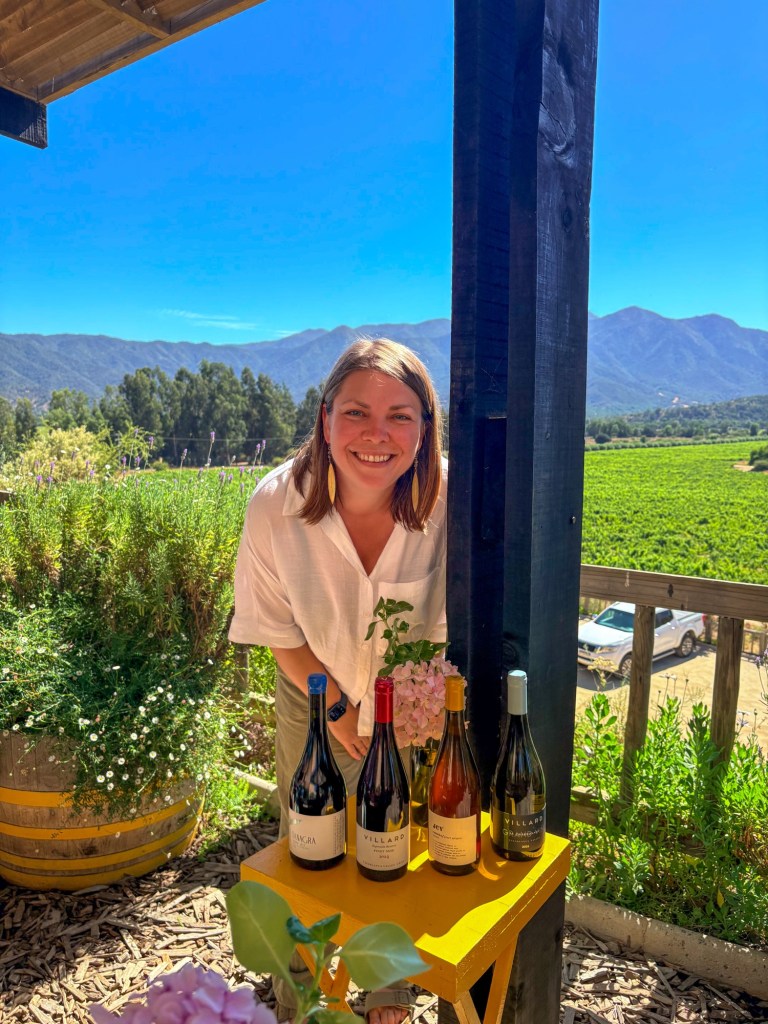
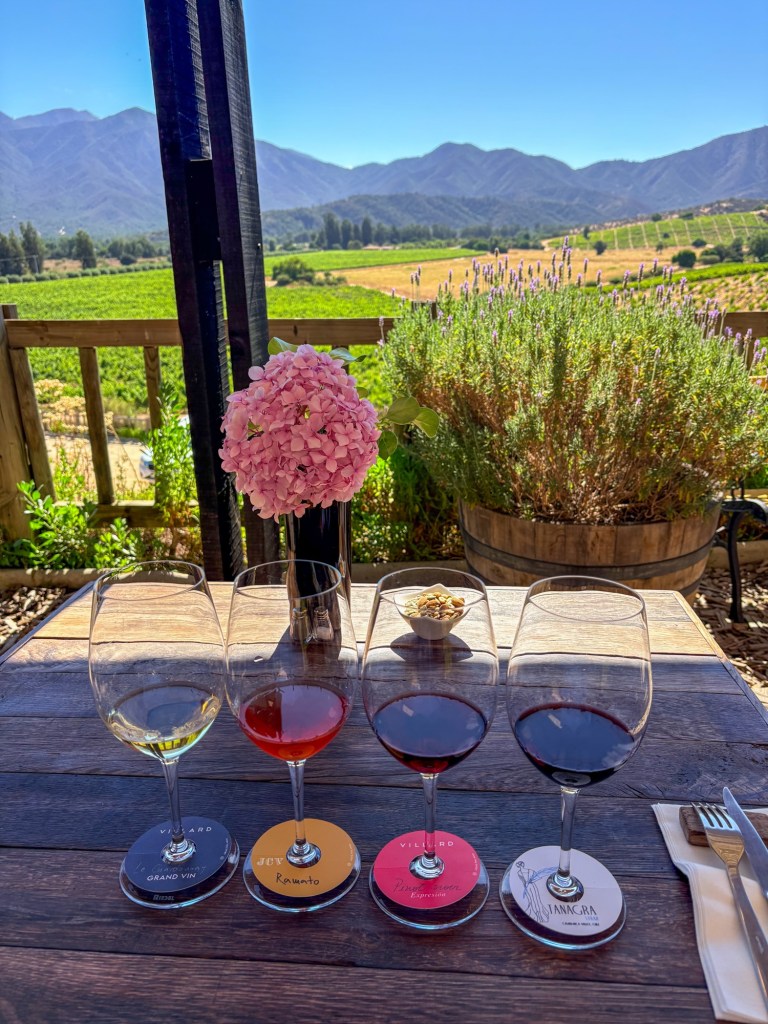
Villard’s Le Chardonnay (2024) is precise and self-possessed: nectarine and pineapple, softened by malolactic fermentation, without the overwhelming butteriness that has made so many Chardonnays difficult to defend at dinner parties. The Tanagra Syrah (2023), Villard’s flagship, comes from old bush vines on a windy hill and spends two years in new oak. It is the kind of wine that makes you slow down. Cherry, blackcurrant, chocolate, silky tannins. The lack of Syrah’s typical pepperiness is conspicuous, but not disturbing.
The surprise of the tasting is the JCV Charlie Villard Ramato Pinot Grigio (2025), made by Jean-Charles under a separate label, partly, one suspects, to navigate his father’s disapproval of the funky and natural. Thirty-nine days of skin contact create a wine full of strawberry, quince, a yeasty undercurrent, and a tart, slightly bitter finish. This is a wine that would sit comfortably on a table with a tuna tataki, a grilled peach salad, or a fragrant bun bo bowl.
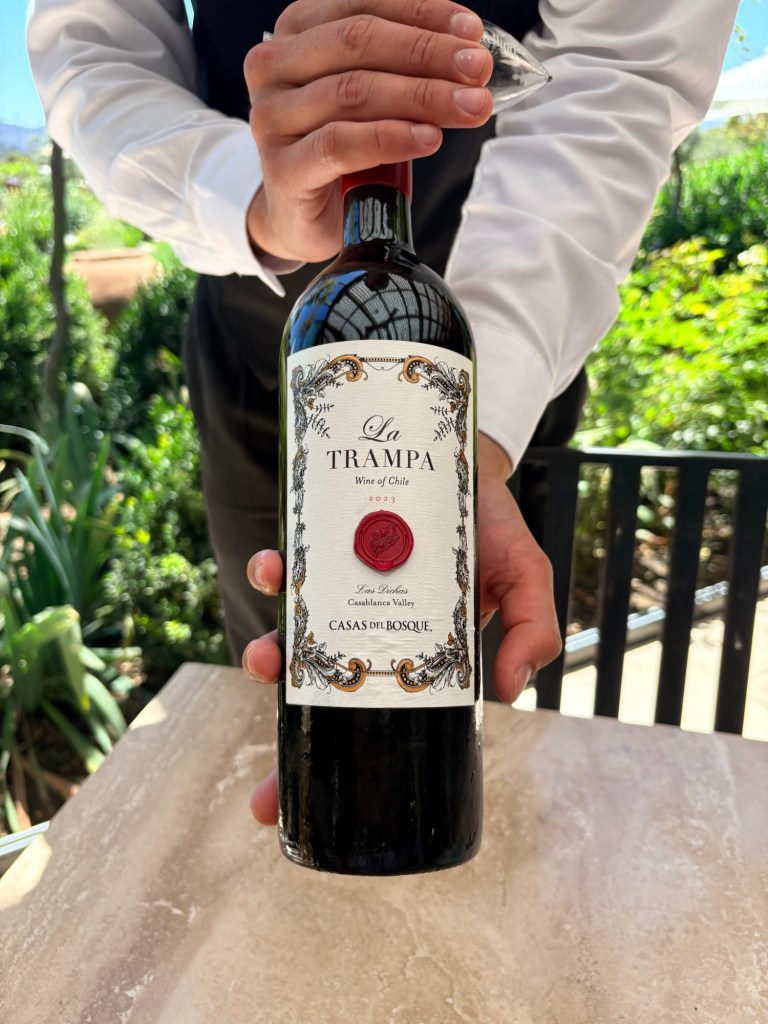
My next stop, Casas del Bosque, is larger, glossier, and more sure of its own importance. The white-washed hacienda buzzes with the particular energy of a place that has hosted countless lazy lunches that stretch straight into dinner. The wine list is diverse and a little confusing, with no obvious hierarchy between the Botanical (organic, simple), Reserve, and Small Parcels ranges.
The Small Parcels Chardonnay (2024) is the most interesting of the whites – richer and more voluptuous than Villard’s, leaning into peach and passion fruit without quite crossing into the Californian excess that has given the grape such an unfair reputation. La Trampa Private Reserve (2023), a Syrah-Malbec-Pinot blend, is lighter than it sounds: fresh cherry and raspberry, lifted acidity, a quietly elegant finish. Both wines make for pleasant lunch company.
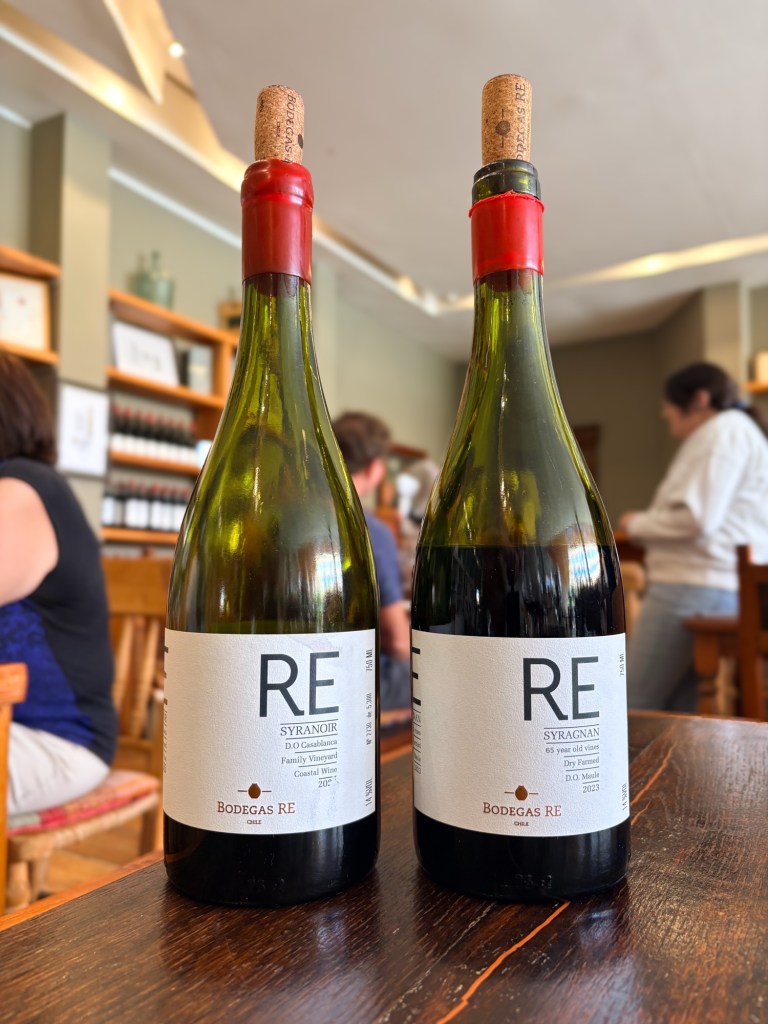
Bodegas Re operates on a different frequency entirely. Its founder, Pablo Morandé Lavín, planted the very first vines in the valley in 1982, giving him local legend status. The winery is committed to organic viticulture and a kind of joyful experimentation that will either delight or alarm you, depending on your disposition. The wines have names like Pinotel (Pinot Noir + Moscatel), Chardonnoir (Chardonnay + Pinot Noir), Cabergnan (Cabernet + Carignan), Syranoir… you get the idea. Traditional clay tinajas line the walls.
Most of what I taste is rustic in the way that asks you to meet it more than halfway – oxidation, funk, a slight medicinal edge. The Syragnan (2023), a 70/30 Syrah-Carignan blend, is the exception: savoury, smoky, leathery, with black olives and dried meat on the palate. An old man wine full of dignity, a counterpoint to the lighter styles Casablanca has become known for.
Kingston Family Vineyards is the day’s final stop and its most visually arresting. The tasting rooms are the kind of modernist architecture that ends up in magazines, all glass and intention, overlooking vineyards that were once part of a dairy farm. The Kingstons have been here for generations, but wine is a newer venture, started by Caroline Kingston in the 90s.
Kingston Pinot Noirs are light, acidic, and fruit-forward in a way that would feel at home in the Ahr Valley in Germany. La Cantera (2022), aged half in old oak and half in concrete egg, is the quietest and best: raspberry, black cherry, earth, a suggestion of spice. Like spotting a deer in the woods, you have to go very still as the wine opens itself up to you. Blink and you’ll miss it.
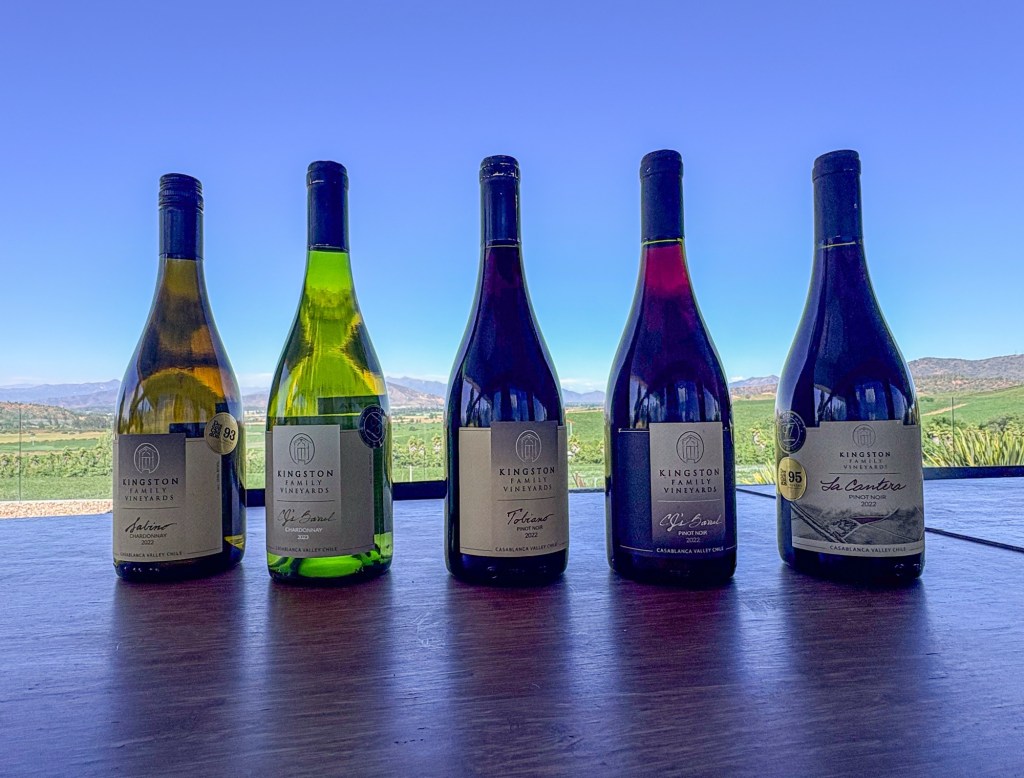
The whites share the same taut, racy profile. CJ’s Barrel Chardonnay (2023) perfectly balances maracujá and gooseberry with an undertone of vanilla and bright acidity. CJ’s Barrel Sauvignon Blanc (2021) is the standout: oak-aged, restrained, quince and pineapple giving way to a long honeyed finish that lingers well past the point where you expected it to stop.
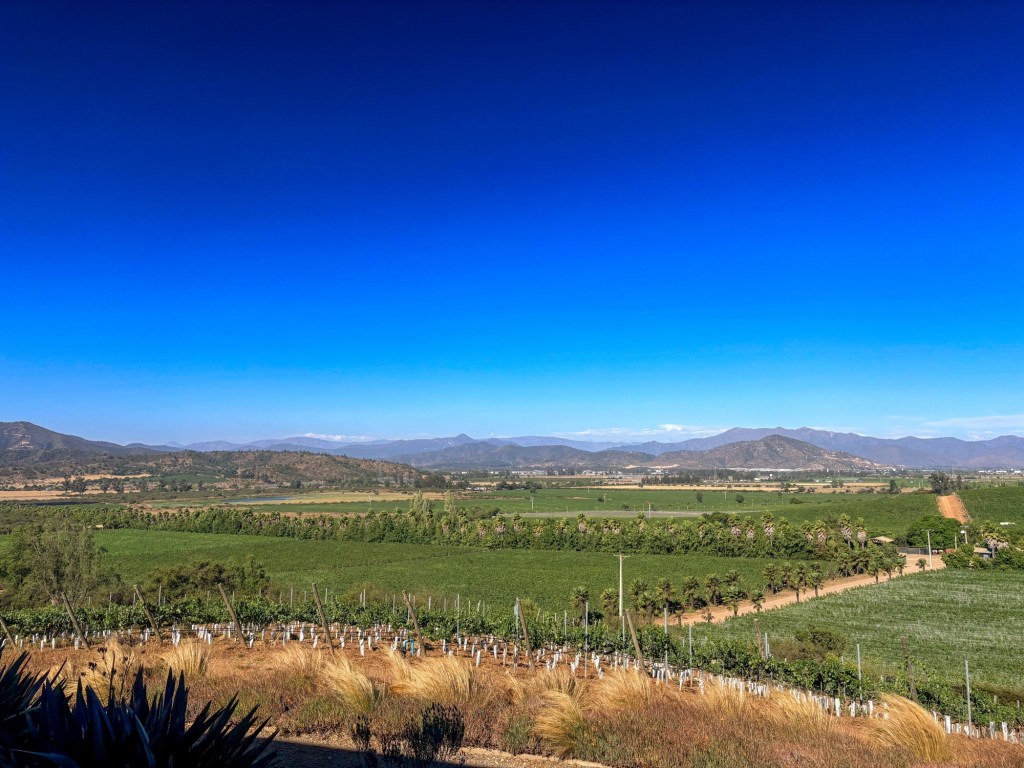
From Kingston’s hilltop patio, Casablanca valley spreads out below under a setting sun. A breeze comes off the Pacific, threatening hats and unattended glasses. The vines murmur as they sway gently. Somewhere down there is the cabin, the three dirt roads, the moment of defeat that started all of this. It seems, in retrospect, like the perfect place to get lost.



Leave a Reply